VMs vs Containers | Simply Explained
Blog / VMs vs Containers | Simply Explained
So what actually is the difference between virtual machines and containers?
TL;DR Summary
- Virtual Machines (VMs) and containers are both virtualization technologies that allow you to run multiple isolated applications on a single physical machine..
- A container is a lightweight, portable, and self-sufficient software package that includes everything needed to run an application: the code, runtime, libraries, and system tools.
Don't let one question ruin your next technical interview...
Virtual Machines
Historically, as server processing power and capacity increased, bare metal applications couldn't fully utilize the newfound abundance of resources. This led to the development of virtual machines (VMs). VMs are designed to run software on top of physical servers, emulating specific hardware systems to optimize resource utilization.VMs run on a hypervisor, which is a software layer enabling multiple VMs to operate on a single physical host. Hypervisors can be classified as either Type 1 (bare-metal, running directly on the hardware) or Type 2 (hosted, running on an existing operating system).Each VM contains a complete operating system (guest OS), necessary binaries, libraries, and the application code itself. This setup results in high resource usage, as each VM requires its own OS kernel and associated overhead.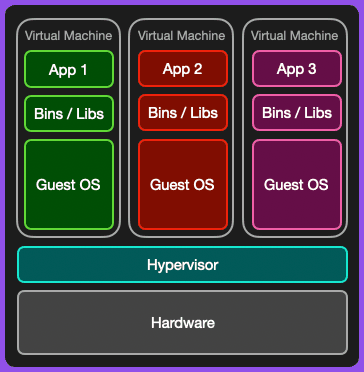
Containers
In contrast, a container is a lightweight, portable, and self-sufficient software package that includes everything needed to run an application: the code, runtime, libraries, and system tools.Containers avoid the overhead drawbacks of VMs by running on a container engine (e.g., Docker, Kubernetes) that operates on the host OS. As a result, containers share the host OS kernel, eliminating the need for separate OS instances for each container, which reduces memory and CPU overhead.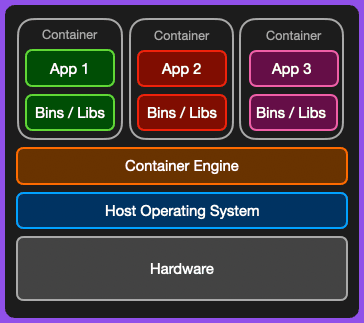
About TechPrep
Never walk into a technical interview unprepared again. TechPrep empowers software engineers to stop guessing and start getting offers. We provide the exact questions asked by tech companies across Data Structures & Algorithms, System Design, Low-Level Design & Practical coding rounds. Don't leave your career up to chance. Join thousands of engineers who have successfully navigated the tech hiring maze and landed roles at top tech companies.